

Google has officially introduced the Google Pixel 11 Pro, bringing a new flagship package built around the Tensor G6 chipset, a bright 6.3-inch LTPO OLED display, up to 16GB of RAM and a triple-camera system with 5x optical zoom. The phone was announced on August 12, 2026, and became available on August 20.
The Pixel 11 Pro also pushes Google’s software strategy forward with Android 17 and support for up to seven major OS updates. Its camera hardware includes a 50MP main sensor, 48MP periscope telephoto and 48MP ultrawide camera, while the 4,850mAh battery supports wired and magnetic wireless charging.
Google Pixel 11 Pro Specifications at a Glance
| Specification | Google Pixel 11 Pro |
|---|---|
| Announcement | August 12, 2026 |
| Availability | August 20, 2026 |
| Dimensions | 152.7 x 71.9 x 8.4 mm |
| Weight | 204 g |
| Build | Glass front/back, aluminum frame |
| Protection | Gorilla Glass Victus 2 |
| Water/Dust Resistance | IP68 |
| SIM | Nano-SIM + eSIM |
| Display | 6.3-inch LTPO OLED |
| Refresh Rate | 120Hz |
| HDR | HDR10+ |
| Peak Brightness | 3,600 nits |
| Resolution | 1280 x 2856 pixels |
| Pixel Density | ~497 ppi |
| Operating System | Android 17 |
| OS Updates | Up to 7 major Android updates |
| Chipset | Google Tensor G6, 3nm |
| CPU | 7-core |
| GPU | IMG CXTP-48-1536 |
| RAM | 12GB / 16GB |
| Storage | 256GB / 512GB / 1TB |
| Storage Type | UFS 4.x |
| Rear Cameras | 50MP + 48MP + 48MP |
| Telephoto | 48MP, 5x optical zoom |
| Ultrawide | 48MP, 123° |
| Front Camera | 42MP ultrawide |
| Rear Video | Up to 8K at 30fps |
| Front Video | Up to 4K at 60fps |
| Speakers | Stereo |
| Wi-Fi | Wi-Fi 7 |
| Bluetooth | Bluetooth 6.0 |
| USB | USB Type-C 3.2 |
| Fingerprint Sensor | Ultrasonic, under-display |
| Battery | 4,850mAh |
| Wired Charging | 30W |
| Wireless Charging | 25W magnetic, Qi2.2 |
| Colors | Canyon, Olive, Fog, Obsidian |
| Starting Listed Price | $1,021.33 / €1,152 / £1,034 |
A Compact Flagship With a Premium Build
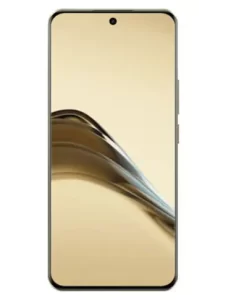
The Pixel 11 Pro measures 152.7 x 71.9 x 8.4mm and weighs 204 grams. Google has used Gorilla Glass Victus 2 on both the front and rear, paired with an aluminum frame.
The IP68 rating adds protection against dust and water. The phone can reportedly withstand immersion up to 1.5 meters for 30 minutes, making the hardware better suited to everyday accidents and outdoor use.
Pixel 11 Pro Colors
Google offers the flagship in four finishes: Canyon, Olive, Fog and Obsidian. The selection gives the Pixel 11 Pro a mixture of understated and more distinctive options.
6.3-Inch LTPO OLED Display
The display is one of the Pixel 11 Pro’s strongest hardware upgrades. It uses a 6.3-inch LTPO OLED panel with a 120Hz refresh rate and HDR10+ support.
Resolution reaches 1280 x 2856 pixels, resulting in approximately 497 pixels per inch. Gorilla Glass Victus 2 provides additional protection for the panel.
Up to 3,600 Nits Peak Brightness
Google has also pushed brightness considerably. The listed peak brightness reaches 3,600 nits, while the supplied testing data records a maximum measured brightness of 2,333 nits.
That difference is important: the advertised peak figure and laboratory measurement are not the same metric. Still, the measured result suggests the Pixel 11 Pro should remain highly visible outdoors.
Tensor G6 Brings Google’s New Flagship Performance
Under the hood, the Pixel 11 Pro runs Google’s Tensor G6, manufactured on a 3nm process. The processor uses a seven-core configuration with one ARM C1-Ultra core clocked at up to 4.1GHz, four C1-Pro cores at 3.4GHz and two C1-Pro cores at 2.65GHz.
Graphics are handled by the IMG CXTP-48-1536 GPU. This combination gives the Pixel 11 Pro a substantial hardware platform for demanding applications, gaming and Google’s computational photography features.
Pixel 11 Pro Benchmark Results
The supplied testing figures show:
- AnTuTu v10: 1,460,255
- AnTuTu v11: 1,952,524
- GeekBench 6: 7,415
- GeekBench 7: 6,947
- 3DMark Wild Life Extreme: 3,452
These figures provide a useful performance reference, although real-world speed can vary depending on software versions, thermal conditions and individual workloads.
Up to 1TB Storage and 16GB RAM
Google has equipped the Pixel 11 Pro with generous memory options. The base configuration includes 256GB storage with 12GB RAM, while the 512GB and 1TB variants come with 16GB RAM.
Storage uses UFS 4.x, but there is no microSD card slot.
For users who shoot a lot of high-resolution video, the 1TB model could be particularly attractive. The phone can record video at up to 8K, so additional internal storage can become valuable quickly.
Triple Camera Setup Focuses on Zoom
Photography remains central to the Pixel 11 Pro experience. The rear setup combines a 50MP main camera, 48MP periscope telephoto and 48MP ultrawide camera.
The main sensor has an f/1.7 aperture, 25mm equivalent focal length, 1/1.3-inch sensor size, multidirectional PDAF and optical image stabilization.
5x Optical Zoom
The 48MP periscope telephoto camera is arguably the most interesting part of the setup. It offers a 106mm equivalent focal length, dual-pixel PDAF, OIS and 5x optical zoom.
That should make the Pixel 11 Pro much more capable for distant subjects than a flagship relying primarily on digital cropping.
123-Degree Ultrawide Camera
The third rear camera is a 48MP ultrawide sensor with an f/1.7 aperture and a 123-degree field of view.
Google also includes features such as Multi-zone Laser AF, Pixel Shift, Ultra-HDR, Best Take and Zoom Enhance.
8K Video Recording Is Included
Video capabilities are equally ambitious. The Pixel 11 Pro can record 8K video at 24/30fps, while 4K recording supports 24, 30 and 60fps.
The phone also supports 1080p recording at up to 240fps and includes gyro-EIS, OIS and 10-bit HDR.
42MP Front Camera
For selfies and video calls, Google uses a 42MP ultrawide front-facing camera with a 103-degree field of view and PDAF.
The front camera can record 4K video at 30 and 60fps, along with 1080p recording at 30 and 60fps.
Android 17 With Long-Term Software Support
The Pixel 11 Pro ships with Android 17 and is listed with support for up to seven major OS updates.
Long software support is one of the phone’s biggest advantages for buyers who intend to keep a flagship for several years. It also strengthens the Pixel 11 Pro’s position as a long-term Android device rather than simply a yearly hardware upgrade.
4,850mAh Battery With Qi2.2 Wireless Charging
The phone carries a 4,850mAh lithium-ion battery. Wired charging reaches 30W and supports PD 3.0 and PPS, with the supplied specification indicating 55% charging in 30 minutes.
Google also supports 25W magnetic wireless charging with Qi2.2, alongside reverse wired charging and bypass charging.
Battery Endurance
The supplied laboratory results give the Pixel 11 Pro an active-use score of 15 hours and 39 minutes. The EU battery information lists 47 hours and 36 minutes of endurance under its testing methodology.
These are different testing measurements, so they should not be interpreted as equivalent real-world screen-on times.
Modern Connectivity and Security
Connectivity is comprehensive, with Wi-Fi 7, Bluetooth 6.0, NFC, GPS with L1+L5 support and multiple satellite positioning systems. The phone uses USB Type-C 3.2 for wired connectivity.
For biometric security, Google has included an ultrasonic fingerprint scanner beneath the display. The Pixel 11 Pro also supports UWB and satellite SOS functionality.
Google Pixel 11 Pro Price
The supplied specification lists the Pixel 11 Pro at approximately $1,021.33, €1,152 or £1,034.
Pricing can vary significantly between markets, storage configurations, taxes and retailer promotions. Buyers in markets such as Pakistan should therefore check the local official or retailer pricing rather than converting the listed international figure directly.
Pixel 11 Pro: Is It a Major Flagship Upgrade?
On paper, the Pixel 11 Pro is a serious flagship package. The combination of the Tensor G6, up to 16GB RAM, 1TB storage, a 120Hz LTPO OLED panel, 5x optical zoom and Android 17 gives Google a strong hardware and software foundation.
The camera setup is especially versatile. A 50MP primary sensor is joined by dedicated 48MP telephoto and ultrawide cameras, while 8K recording gives creators more flexibility.
The Google Pixel 11 Pro is clearly aimed at users who want Google’s software experience without compromising on flagship hardware. Its 3nm Tensor G6, seven-year-class update commitment, bright LTPO display and dedicated 5x periscope camera make it an interesting alternative to competing premium Android phones.








Top Mobile Brands












Latest News

Sony Xperia 1 VIII Android 17 Update Rolls Out With Major New Features

vivo X500, X500 Pro & Pro Max Launching September 21 Here’s What We Know

Oppo Find X10 Pro Max Camera Details Are Out Here’s What Makes It Different

iPhone 18 Pro Max Leak Reveals Stunning Dark Cherry Color Ahead of Apple Event

Poco X8 Power Debuts as Poco’s Biggest Battery Phone Yet Full Specs and Price

Zawar Alam is a passionate technology and mobile phone content writer with years of experience covering the latest smartphones, gadgets, apps, and tech trends. He specializes in delivering accurate news, detailed specifications, feature comparisons, and helpful buying guides. His goal is to provide readers with clear, reliable, and up-to-date information to help them make informed technology decisions. Through his work, he stays committed to tracking the fast-changing world of mobile technology and consumer electronics.